SIU Neurology Resident Neuroscience Course

Your name:
Today's date (mm/dd/yy):

Chapter 19. Integration of Sensory and Motor Function

  1. Heschl's gyrus is an example of
    1. Primary sensory cortex
    2. A unimodal association area
    3. A multimodal association area
    4. Motor association cortex
  2. The hippocampus is an example of
    1. Primary sensory cortex
    2. A unimodal association area
    3. A multimodal association area
    4. Motor association cortex
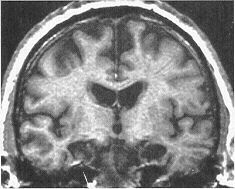
  3. A patient with a wound like this is most likely to suffer from
    1. Difficulty with working memory
    2. Difficulty with long term memory
    3. Difficulty reaching for an object, despite normal visual acuity
    4. Poor executive function
  4. What is the name of this famous patient?
    1. H.M.
    2. Phineas Gage
    3. John Hughlings Jackson
    4. Ulysses S. Grant

     
  5. This patient is likely to have
    1. Poor executive function
    2. Difficulty with visuospatial integration
    3. Anosognosia
    4. Difficulty making new memories
  6. Balint syndrome occurs with bilateral damage to the
    1. Inferior parietal lobule
    2. Parahippocampal gyrus
    3. Inferior calcarine cortex
    4. Cingulate cortex
  7. Prefrontal lobe damage causes a deficit in
    1. Delayed alternation tasks
    2. Visuospatial integration
    3. All of the above
    4. Word comprehension
  8. The __________  cerebral hemisphere is more concerned with word semantics
    1. Left
    2. Right
  9. The __________ cerebral hemisphere is more concerned with tone, emotion and facial expression
    1. Left
    2. Right

Chapter 20. From Nerve Cells to Cognition

  1. The proportions of the sensory homunculus are most closely related to
    1. Size of body part
    2. Amount of sensory innervation
    3. Skin surface area
    4. The price of tea in China
  2. A patient had a motor convulsion that began in the left hand, progressed to the right hand, then the right leg, then the left leg. Consciousness was preserved. This is indicative of
    1. A "Jacksonian march"
    2. Nonphysiologic dysfunction
    3. Remapping of motor cortex
    4. Developmental dysplasia of motor homonculus
  3. In an experiment in which monkeys are trained to repeatedly use the tips of certain fingers in a behavioral task, the result was
    1. Enlargement of the cortical motor representation for the fingers used in training
    2. Remapping of referred sensation
    3. Astereognosis
    4. All of the above
  4. Which of these signs and symptoms are not characteristic of right parietal damage?
    1. Spatial neglect
    2. Deficits in delayed alternation tasks
    3. Astereognosis
    4. Dressing apraxia
  5. According to the philosphers John Searle and Thomas Nagel, the dominant feature of consciousness is
    1. Subjectivity
    2. Unitary nature
    3. Intentionality
    4. All of the above
This is an open-book test due 11/27/01
A score of 80% or better is required. If your score is less, you are required to retake the test.


Back to neuroscience page